Seseh, Bali: the quiet coast north of Pererenan
Seseh is the fishing village on the coast just north of Pererenan, on the way to Tanah Lot. It is quieter than anywhere in Canggu, with a black sand beach, a sea temple and rice fields behind the villas. You give up shops and schools nearby in exchange for calm evenings.
Where Seseh sits on the coast
Seseh is a coastal village in the Mengwi subdistrict of Badung regency, about 15 km north of Seminyak, between Canggu and Tanah Lot (A Fun Couple). The same guide puts it roughly ten minutes from Canggu by scooter, or a walk along the sand. Cemagi is the next village, a few kilometres further northwest.
Our Pererenan guide covers the village directly south. Compared with Pererenan, you see more fields and fishing boats and far fewer cafés.
Ngurah Rai airport is about 22 km away by road. Rome2Rio puts the drive at around 27 minutes, which assumes empty roads (Rome2Rio). A Seseh guide from a local property agency allows 60 to 90 minutes depending on the time of day (Villa Bali Sale). For a flight, plan on the longer figure.
Seseh beach: walking yes, swimming with care
The beach is black sand. It is good for long walks at sunset, and you can walk south to Pererenan or north towards Cemagi. Lonely Planet says the waves break right on the shore and that Seseh is not ideal for swimming or surfing, though small rock pools form at the northern end at low tide (Lonely Planet). Wanderlog warns of strong waves and rip currents (Wanderlog), and a local guide adds a powerful current and rocky stretches of shore (Lokasi Bali).
Surfers have a reef break here for intermediate level, best at mid to high tide (Wave Explorers). For swimming, every guide I read says the same thing, so I would not swim at Seseh. With children, keep to the rock pools at low tide and drive to a calmer beach with lifeguards for a proper swim.
Pura Seseh and village ceremonies
Pura Seseh is the village sea temple, described as an ancient one by travel guides (A Fun Couple). A travel writer who stayed in the village lists other temples nearby, including a Pura Dalem (Bjorn Grotting). Lonely Planet notes that Hindu ceremonies, with people dressed in white, take place regularly on the pavilion near the beach car park.
Ceremonies close the beach road for a while, and processions slow traffic. Dress modestly near the temple and give way to processions. Your neighbours will usually tell you when a big day is coming.
Cafés and food around Seseh
Do not expect the café density of Batu Bolong. The A Fun Couple guide says Seseh has fewer coffee shops than Canggu or Pererenan, and that the area has “limited commercial establishments”. On the sand, Lonely Planet lists Warung Pantai, a palm-thatch restaurant, and several eateries along Jalan Pantai Seseh. On that same road, a remote-work directory lists Seseh St Cafe, open daily from 7 am to 10 pm, with Western breakfasts and Indonesian dishes later in the day (Freaking Nomads). Check before you go, as small places in this area open and close often.
For remote work, de’TOPAZ Seseh on Jalan Pantai Munggu has a terrace over the rice fields and serves food from breakfast to dinner, with a kids menu (Freaking Nomads). Its operator’s website, with a 2024 copyright, still lists the Seseh branch as coming soon, and I found no recent reviews, so check before you go. The listing also warns that its internet speed figure may not be accurate. Test the connection yourself before you make it your office.
For a big supermarket shop, an international restaurant or a gym, most residents drive south to Pererenan, Canggu or Kerobokan.
Seseh compared with Pererenan and Berawa
| Seseh | Pererenan | Berawa and Umalas | |
|---|---|---|---|
| Atmosphere | Fishing village, rice fields | Village, many new cafés | Residential, busy main roads |
| Beach | Black sand, rocks and currents | Beach breaks, less crowded than Canggu | Berawa beach, beach clubs |
| Cafés and shops | A few | Plenty | Plenty, plus large supermarkets |
| International schools | Long drive | Long drive | Close by |
| Evenings | Very quiet | Quiet | Livelier |
The table is my own summary of the sources above and the other guides on this site. The Berawa guide and the guide to living in Umalas give the details for the southern side.
Traffic and the drive south
The drive is the real cost of living here. To get from Seseh to the schools, clinics and supermarkets of Berawa, Umalas or Kerobokan, you have to cross the Canggu area, and the Canggu to Tanah Lot road jams at peak hours. Traffic officials say the Canggu roads are all about the same width and all heavily used, which makes diverting traffic hard (The Nightly). Police have tried one-way systems around Canggu, including a shortcut at Bumbak (detik).
A scooter slips through the jams faster than a car. With a daily school run, many families hire a driver instead. Our guide to hiring a private driver by the day or month explains how that works. Before you sign for a villa in Seseh, do the drive to school or work at 7.30 am and at 5 pm, on a weekday.
Before you rent in Seseh
Many villas here sit down narrow lanes between rice fields. Ask whether the lane floods in heavy rain, especially from November to March; our rainy season guide explains what to expect. Ask what is being built next door, as land on this coast is still being developed. Ask for a real internet speed test at the villa, since the A Fun Couple guide warns that connections vary in the area.
Check exactly what the rent includes, line by line: electricity, internet, cleaning, pool care. Our guide to monthly or yearly villa rental in Bali lists the questions to ask before you sign.
Living closer to the schools
Seseh suits couples and remote workers who want calm and a long beach walk at the end of the day. If you have children at school in Berawa or Umalas, the daily drive will weigh more than the sunsets.
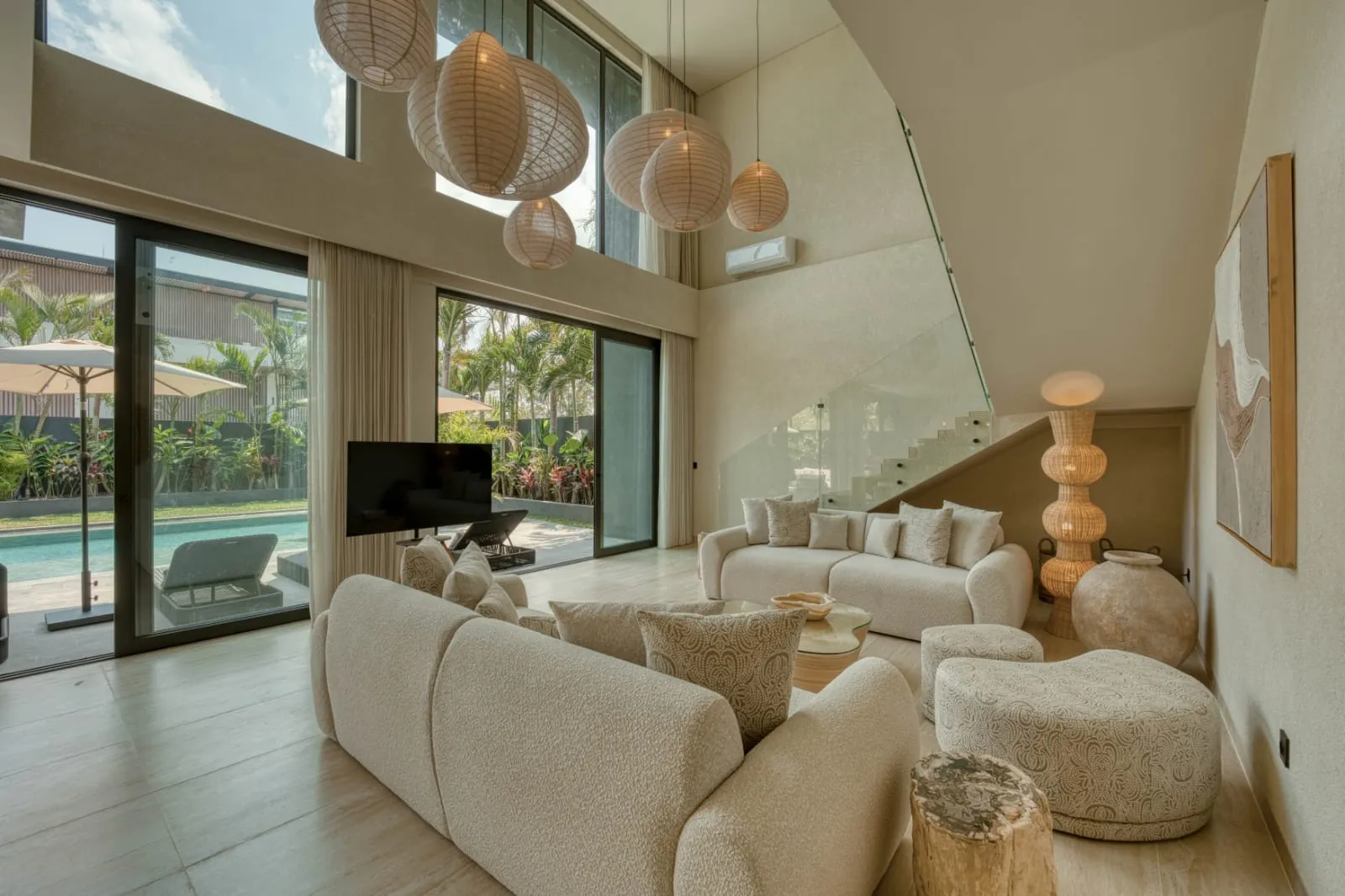
Villa Awana is a middle option. It is in Dharma Residence, on Jl. Bumbak Dauh between Umalas and Berawa, close to the schools and supermarkets, and Seseh is still within reach for a weekend walk on the beach. The villa was built in 2026 and is fully furnished, with 4 bedrooms, 3 bathrooms, 300 m² of living space on 600 m² of land and a 60 m² pool. There is private parking for 2 cars and 4 scooters. Rent is 10,000 USD a month from one month, or 110,000 USD for a year paid in advance (about 9,167 USD a month), taxes included and with no agency fees. The deposit is one month’s rent. Daily housekeeping and pool cleaning are fully included and the garden is maintained; electricity and fibre internet are paid by the tenant.
The villa is managed by Celo Studio. Write to them on WhatsApp at +62 813-5937-919 to arrange a visit; visits run until 4 pm.