Dengue and mosquitoes in Bali: prevention at home
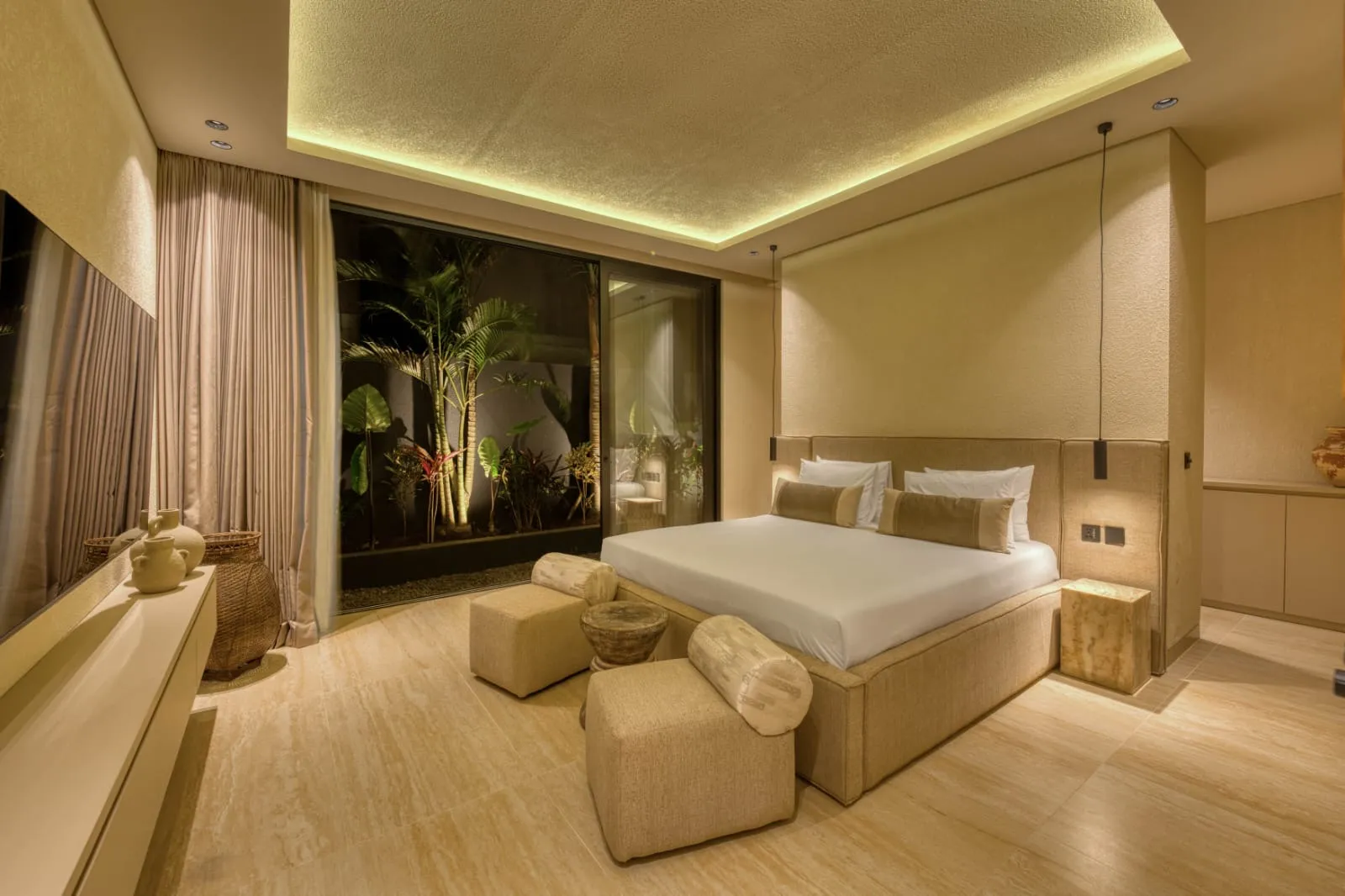
Dengue in Bali is spread by mosquitoes that breed in small pools of still water, so most of what protects you happens at home: no standing water in the garden, screened or air-conditioned bedrooms, and repellent during the day. Cases in Bali fell sharply in 2026 after a heavy 2024, but the island’s health office expects numbers to rise each year once the rainy season starts. This guide covers the figures, what to do around a villa, the vaccine and when to go to hospital.
Dengue in Bali: the recent figures
Bali recorded 10,391 dengue cases in 2025, down from 15,570 in 2024 (Bali.live). Badung, the regency that includes Canggu, Umalas and Kerobokan, had the most cases of any regency that year, with 2,038. Sources give 13 or 14 deaths for 2025.
In 2026 the numbers dropped further. Between January and July, Bali recorded 1,588 cases, against 9,116 over the same months of 2025, and Badung went from 63 cases in January to 28 in August (Bali.live).
| Period | Cases in Bali | Source |
|---|---|---|
| Full year 2024 | 15,570 | Bali.live |
| Full year 2025 | 10,391 | Bali.live |
| January to July 2025 | 9,116 | Bali.live |
| January to July 2026 | 1,588 | Bali.live |
These are cases recorded by hospitals and clinics. Mild cases that never see a doctor are not counted.
Why the rainy season matters
The Bali health office links dengue to rainfall. In October 2025 it warned that cases would start to rise from late November with the rains, and said that in 2025 monthly cases peaked in February at 1,841 before falling to 208 in September (Antara Bali). If you arrive in November or December, you are arriving at the start of that season. Our guide to the Bali rainy season covers what the wet months are like to live through.
Where the mosquitoes breed around a villa
The mosquitoes that carry dengue lay their eggs in small amounts of still water. A California public health leaflet says they can breed in water as small as a bottle cap, that eggs stick to the inside of containers just above the waterline and can survive for months while dry, and that the answer is to dump and scrub anything holding water once a week (California Department of Public Health).
In a Bali villa, the usual places are:
- Saucers under potted plants, and plant pots without drainage.
- Buckets, watering cans and children’s toys left in the garden.
- Blocked gutters and the corners of flat roofs.
- Decorative water bowls and small ponds without fish.
- Bathroom floor drains in rooms nobody uses.
- Offering trays and coconut shells that fill with rain.
The Bali health office calls its approach 3M Plus: drain water containers, cover water stores tightly, and recycle or remove anything that can collect water, plus other measures such as repellent (Antara Bali). Denpasar’s health department has said that fogging alone is not enough and asks residents to clear standing water at least once a week (Bali.live).
If your villa has daily housekeeping and garden care, ask the team to add a weekly round of the garden for standing water. It takes ten minutes.
Protecting yourself and the children
The CDC advises using a registered insect repellent, wearing loose long sleeves and long trousers, and staying in air-conditioned or screened rooms, with a bed net when those are not available (CDC). It notes that the mosquitoes bite during the day as well as at night. In practice, that means repellent on the school run and at the café in the afternoon, and not only at dusk.
For children, keep bedroom doors closed when the air conditioning is on, check the window screens, and put repellent on before outdoor play. Open-sided living rooms let mosquitoes in as easily as the breeze, so that is where repellent matters most in the evening.
The dengue vaccine in Bali
The dengue vaccine available in Bali is Qdenga. One Bali guide describes it as two doses three months apart, approved for ages 6 to 45 in Indonesia, and advises seeing a travel doctor 6 to 8 weeks before you leave (bali.com). Bali International Hospital in Sanur sells a dengue vaccine package at Rp 770,000 for adults aged 18 to 45, sends children aged 4 to 17 to its paediatric clinic, and asks patients over 45 to consult its team first (Bali International Hospital).
Age limits differ between sources, so confirm with the clinic and your own doctor, especially if you are pregnant or have a health condition. The vaccine does not replace repellent and clearing water.
Symptoms and when to see a doctor
Symptoms usually start 4 to 10 days after the bite: high fever, a bad headache, pain behind the eyes, muscle and joint pain, nausea and sometimes a rash. Take paracetamol for the fever and avoid ibuprofen, aspirin and naproxen, which can raise the risk of bleeding (bali.com).
The Bali health office advises seeing a doctor if a sudden fever lasts more than two days. Go to hospital straight away for severe stomach pain, repeated vomiting, bleeding gums, blood in urine or stool, or a sudden decline after the person seemed to improve (bali.com). A blood test at a clinic or hospital confirms dengue. Our guide to healthcare in Bali for long-stay residents lists the 24-hour hospitals in the south. Save the nearest one on your phone before you need it.
Villa Awana and the wet season
Villa Awana is in Dharma Residence on Jalan Bumbak Dauh, Umalas-Berawa (Kerobokan). It has four bedrooms, three bathrooms, 300 m² of living space on a 600 m² plot and a 60 m² pool, and it was built in 2026 and is fully furnished. Housekeeping and pool cleaning come every day, 100% included, and the garden is maintained, so a weekly check for standing water fits into a routine that is already there. Private parking takes two cars and four scooters.
The rent is 10,000 USD a month from one month, or 110,000 USD for a year paid upfront, about 9,167 USD a month. Taxes are included, there is no agency fee, and the deposit is one month’s rent. Electricity and fibre internet are paid by the tenant.
Celo Studio manages the villa and runs visits until 4 pm. Message them on WhatsApp (+62 813-5937-919) with your dates.